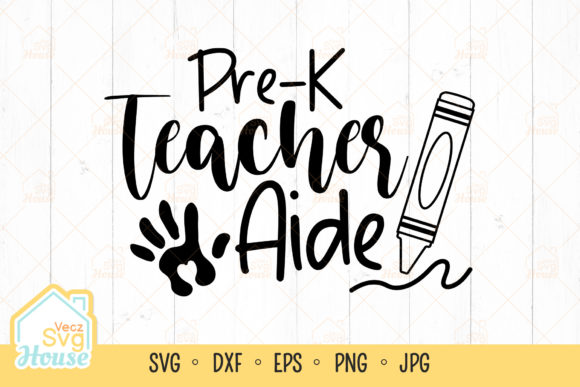
Reviewing the Pre-k Teacher Aide Paraprofessional Svg for Embroidery
As a designer who spends more time staring at stitch simulations than I care to admit, I approach every new machine embroidery design with a mix of optimism and skepticism. We have all been there: you download a cute graphic, load it onto your machine, and watch in horror as the thread nests into a bird’s nest because the density was all wrong or the details were too fine for the fabric. Today, I am taking a close look at the Pre-k Teacher Aide Paraprofessional Svg. This is not just another clipart file; for those of us in the Crafts and Graphics space, it represents a specific niche market that is hungry for personalized, professional-looking apparel.
First Impressions: Mood and Visual Personality
The first thing that strikes me about the Pre-k Teacher Aide Paraprofessional Svg is its clarity. In the world of digital embroidery file assets, simplicity is often king, especially when dealing with text-heavy or role-specific designs. The layout feels balanced, avoiding the cluttered look that plagues so many instant-download files. It carries a mood that is both professional and approachable—perfect for the early childhood education environment. The visual personality suggests warmth and reliability, which is exactly what a paraprofessional or teacher aide wants to project to parents and students alike.
When I visualize this as an embroidery project, I see it working best with clean, bold lines. The design does not rely on overly intricate shading, which is a good sign for stitchability. Instead, it leans on strong shapes and legible typography. This makes it versatile for various applications, from a subtle chest logo on a polo shirt to a larger statement piece on a tote bag.
Real-World Application: The Custom Sweatshirt Test
To truly evaluate a design, you have to imagine it on a real product. Let’s consider a common scenario: a local preschool is ordering custom gear for their staff appreciation week. You, as an Etsy seller or small shop owner, need a design that looks high-end but is efficient to produce. The Pre-k Teacher Aide Paraprofessional Svg fits this bill perfectly for a sweatshirt embroidery project.
I imagine stitching this onto a heather grey crewneck. The contrast between the thread colors and the fabric would be key here. Because the design is likely composed of solid shapes and text, it allows for creative use of thread colors. You could use school colors to create brand consistency, or opt for soft pastels to match the gentle aesthetic of a pre-k classroom. The result is a handmade product that feels bespoke rather than mass-produced. Customers, in this case, the school administration, appreciate when the final product looks crisp and professional, reinforcing their trust in your craft business.
Versatility Across Product Lines
Beyond sweatshirts, this design has legs. Consider a sturdy canvas tote bag design. Teachers carry endless supplies, and a personalized tote is a practical gift. The Pre-k Teacher Aide Paraprofessional Svg would hold up well here, provided you use a heavy-weight stabilizer to prevent puckering on the textured fabric. Similarly, this could serve as a charming personalized gift for end-of-year presents. Imagine it embroidered on a high-quality apron for art class or even a cozy pillow cover for the reading nook. The adaptability of this embroidery file makes it a valuable asset in your library of design assets.
Technical Considerations and Stitching Strategy
While the design looks promising on screen, the transition to needle and thread requires careful planning. One of the most critical aspects to review is the stitch density. If the design includes large filled areas, you must ensure they are not too dense, which can cause fabric distortion, especially on thinner materials like t-shirts. Conversely, if the text is small, you need to verify that the satin stitch width is appropriate. Too wide, and the letters will look bulky; too narrow, and they may not cover the fabric adequately.
For those using this as an applique design, the process changes slightly. You would need to check if the file includes placement stitches, tack-down stitches, and finish stitches. If it is a standard fill design, you might need to adjust your technique when working on stretchy fabrics. Always use the right stabilizer. For a custom apparel piece like a jersey knit tee, a cut-away stabilizer is non-negotiable to maintain the integrity of the design after washing.
Navigating Fabric and Hoop Constraints
Where should you use caution? Small hoop sizes can be tricky if the design has a wide aspect ratio. You need to confirm the hoop size compatibility before purchasing or stitching. Additionally, be mindful of fabric texture. On highly textured towels or fleece, fine details can get lost. In such cases, increasing the stitch count slightly or choosing a contrasting thread color can help maintain stitching clarity. Dark fabrics present another challenge; if the design relies on light-colored threads, ensure your underlay stitches are sufficient to prevent the background fabric from showing through.
Curved surfaces, like caps, require extra attention. If you plan to create an embroidered patch or stitch directly onto a hat, test the design on a similar curved scrap piece first. The pull of the thread can distort the shape if the stabilization is not robust enough. This is where your experience as a designer pays off—anticipating these issues before they ruin a client’s garment.
Enhancing Brand Value and Customer Trust
Why does the quality of your Graphics matter? Because it directly impacts perceived value. A clean, well-digitized Pre-k Teacher Aide Paraprofessional Svg signals professionalism. When customers receive a finished product that looks sharp and durable, they are more likely to leave positive reviews and return for future purchases. This builds customer trust and enhances your brand reputation. In the competitive world of commercial embroidery, attention to detail is what separates hobbyists from successful entrepreneurs.
Furthermore, using high-quality printable mockup images in your online listings can significantly boost buyer engagement. Show the design on a variety of items—baby embroidery onesies, holiday embroidery gifts, and everyday wear. This helps customers visualize the potential, making them more likely to click "buy."
Practical Designer Notes for Best Results
Before you start stitching for a client, take these practical steps:
- Test on Scrap Fabric: Always run a test stitch-out on the same type of fabric you plan to use for the final product. This reveals any tension issues or density problems.
- Check Thread Contrast: View your design in black and white to ensure the elements are distinct. Low contrast can make the design look muddy from a distance.
- Review Licensing: Since this is an Instant Download file, confirm the license terms. Can you use it for commercial sales? Are there restrictions on the number of physical items you can produce? Always respect intellectual property rights.
- Inspect Small Details: Zoom in on the digital file. Are there tiny gaps or overlapping nodes that could cause thread breaks? Clean up any unnecessary points if you have editing software.
- Consider Washability: For items like kitchen towel or baby clothes that undergo frequent washing, ensure the stitch type is secure. A running stitch border might not hold up as well as a satin or fill stitch in high-wear areas.
In conclusion, the Pre-k Teacher Aide Paraprofessional Svg is a solid addition to your toolkit if approached with a designer’s eye. It offers a blend of professional appeal and practical versatility, suitable for a wide range of small shop product lines. By paying attention to technical details like stabilizer choice, thread tension, and fabric compatibility, you can transform this digital asset into a high-value personalized gift or bestselling apparel item. Remember, the magic lies not just in the file itself, but in how you execute it.