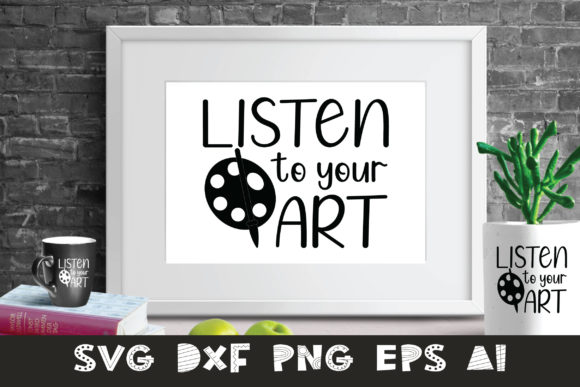
Listen to Your Art: A Designer’s Review
As a designer who spends more time staring at stitch simulations than I care to admit, I have learned that not every pretty graphic translates well into thread. We live in an era where digital assets are abundant, but finding a machine embroidery design that balances aesthetic appeal with technical feasibility is rare. Recently, I evaluated the "Listen to Your Art" bundle, a collection marketed primarily as a Teacher SVG Bundle. While the description highlights its utility for home decor, palette signs, and clothing, my interest lay in how these graphics hold up when translated from vector lines to actual stitches on fabric.
The first impression of Listen to Your Art is one of quiet confidence. The layout avoids the cluttered, overly complex trends that often plague digital marketplaces. Instead, it offers clean lines and a thematic focus that suggests mindfulness and creativity. For an embroidery project, this simplicity is a virtue. Complex gradients and tiny details often get lost in translation, especially when working with standard thread colors and typical stitch density limitations. This design feels intentional, leaving enough negative space to let the fabric texture breathe, which is crucial for a professional-looking finished product.
Real-World Application: The Custom Tote Test
To truly understand the value of these design assets, I moved beyond the screen and into the studio. I imagined a specific scenario: a custom order for a local bookstore owner who wanted branded tote bag design options for her staff. She needed something that felt artistic but not overpowering. I selected the primary graphic from the Listen to Your Art collection to test on a heavy cotton canvas.
The process began with file preparation. Since the bundle includes SVG, DXF, EPS, PNG, and AI files, I had flexibility. For embroidery, I imported the SVG into my digitizing software to assess the pathing. The shapes were closed and clean, which is essential for creating smooth fill stitch areas without excessive jumping or trimming. I opted for a combination of satin stitch for the borders and a lighter fill for the interior elements to keep the hand of the fabric soft. A stiff, dense embroidery on a tote bag can make it unpleasant to carry, so managing stitch density was my top priority.
When I ran the test on scrap fabric, the results were promising. The design maintained its integrity without puckering, provided I used a appropriate cut-away stabilizer. This is a critical note for anyone using these Graphics in a commercial setting: the digital file is just the starting point. The final look depends heavily on your digitizing choices, hoop tension, and material selection. For this crafts project, the design proved versatile enough to work as a central chest piece on a sweatshirt or a subtle corner accent on a kitchen towel.
Versatility Across Products and Fabrics
One of the strongest aspects of Listen to Your Art is its adaptability. While it is sold as a teacher-themed bundle, the artistic nature of the graphic allows it to transcend niche markets. I see strong potential for this design in several areas:
- Custom Apparel: It works beautifully on sweatshirt embroidery, where the thicker fabric can support slightly denser stitching without distortion. It also scales well for baby embroidery on onesies, provided you reduce the size and use softer threads.
- Home Decor: The design lends itself to holiday embroidery gifts, such as personalized pillow covers or tea towels. The clean lines look particularly striking on linen or cotton blends.
- Accessories: For an embroidered patch, the bold outlines allow for easy cutting and finishing. It could also be adapted for caps, though curved surfaces require careful hooping and potentially a different underlay strategy.
However, versatility does not mean universal ease. When applying this design to stretchy fabrics like jersey tees, extra care is needed. I recommend using a stabilizer that matches the stretch of the fabric to prevent the design from warping after washing. Similarly, on dark fabrics, you must consider thread contrast. The design relies on shape recognition, so if your thread color blends too much with the background, the message gets lost. Always test your thread colors against your fabric choice before committing to a full production run.
Technical Considerations for Embroiderers
For those planning to use Listen to Your Art in a commercial embroidery context, there are practical constraints to consider. The bundle provides vector files, which means you will likely need to digitize them yourself or use an auto-digitizing feature with caution. Auto-digitizing often creates inefficient paths and excessive stitch counts. A professional touch involves manually adjusting the stitch angles and density to suit the specific garment.
Pay close attention to small details. If you plan to scale the design down for a pocket logo or a personalized gift tag, ensure that any fine lines do not become too thin to stitch reliably. Threads have a minimum width; anything smaller may break or look sparse. I advise creating a black-and-white mockup to check for clarity. If the design loses its definition in monochrome, it may need simplification before stitching.
Additionally, consider the hoop size. While the design is scalable, placing it in a small hoop might limit your ability to use larger, more efficient stitch patterns. For larger items like blankets or aprons, a bigger hoop allows for better stabilization and fewer re-hoops, which reduces the risk of misalignment.
Value for Small Business Owners and Makers
For the Etsy seller or small shop product creator, the value of Listen to Your Art lies in its professional appearance. Customers associate clean, well-executed embroidery with quality. A sloppy or poorly digitized design can undermine trust, whereas a crisp, thoughtful graphic enhances brand consistency. This design supports that goal by offering a polished look that appeals to a broad audience.
It is also worth noting the licensing aspect. Before selling handmade product items featuring this design, confirm the license terms provided with the bundle. Most digital sellers allow commercial use for physical items but restrict the resale of the digital file itself. Understanding these boundaries protects your craft business and ensures ethical practices.
In terms of marketing, this design is highly "instagrammable." Its aesthetic fits well with current trends in mindful living and creative education. Using it in printable mockup previews for your online store can help customers visualize the final product, increasing conversion rates. Whether you are creating custom apparel for a school fundraiser or unique gifts for teachers, Listen to Your Art provides a solid foundation for high-quality work.
Final Verdict
After thorough evaluation, I find Listen to Your Art to be a reliable and versatile addition to any designer’s library. It is not just a collection of shapes; it is a tool for creating meaningful, tangible items. The key to success lies in respecting the technical requirements of embroidery. Test on scraps, choose your stabilizer wisely, and adjust your digitizing settings to match your fabric. When treated with care, this design elevates simple textiles into cherished keepsakes. For makers who value both form and function, it is a worthy investment.